Press reviews
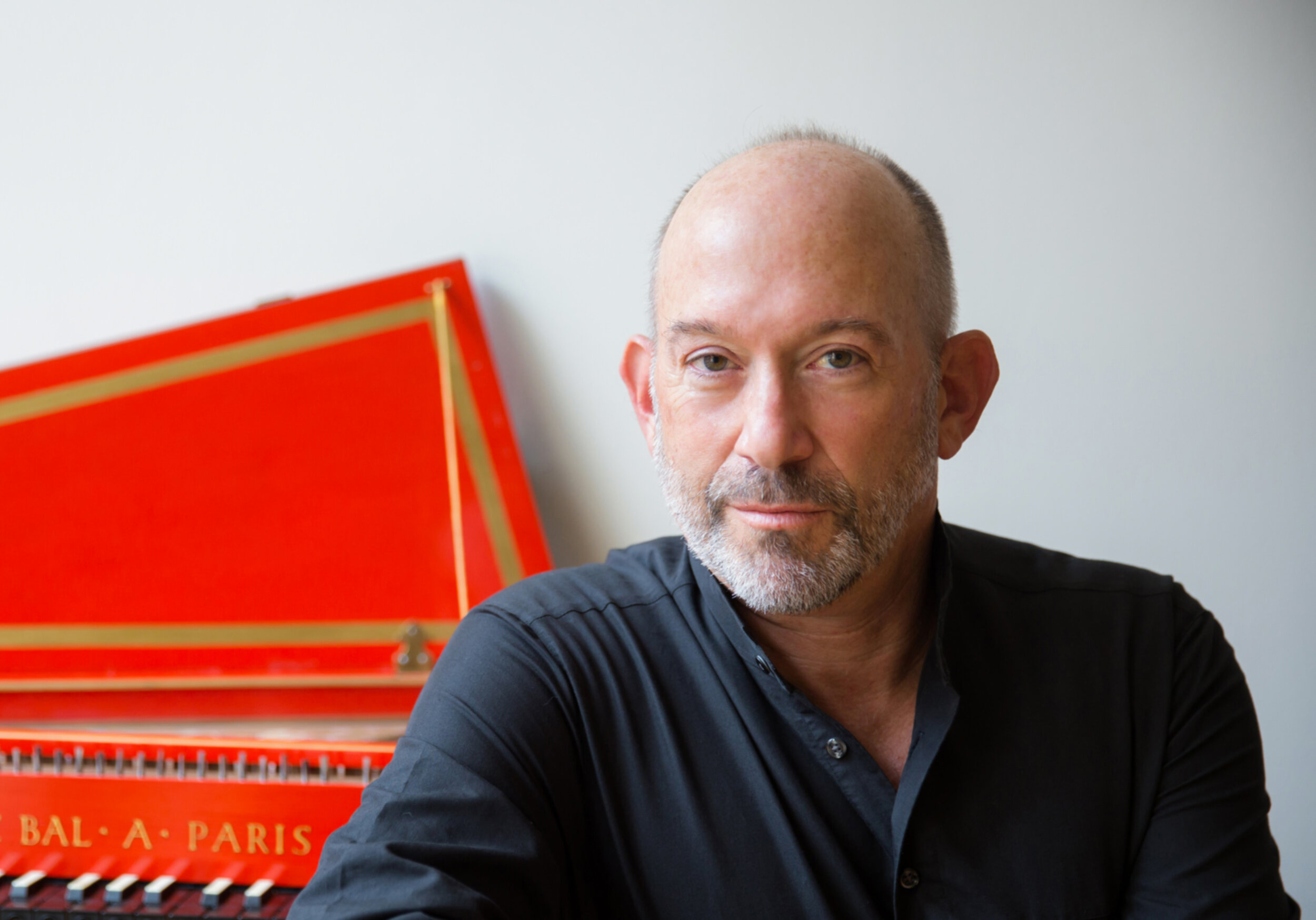
Photo © Jenny Gorman

The harpsichordist Kenneth Weiss performed 'The art of fugue' at the Petit Palau
“In front of a packed hall, Weiss addressed the audience to explain that The Art of Fugue is the pinnacle of contrapuntal writing… Through the fourteen contrapuntal pieces that make up The Art of Fugue, Weiss not only demonstrated his magnificent technical ability on the harpsichord, but, little by little, he created an intense climate of introspection, immersing us in the hypnotic music and isolating us from the outside world… The Art of Fugue is an unfortunately rare work to hear live, and for this reason we appreciate with even greater enthusiasm the feat of Weiss, who brought us one of the most complex and abstract pieces of the German master, in an interpretation full of light and ideas… The audience, devoted and extremely concentrated, after a sepulchral silence during the concert, broke into enthusiastic applause for Weiss, for what was an imposing performance.”
Palau de la Música,
06/11/2025

Restoring Bach’s voice — Kenneth Weiss’s ‘Goldberg Variations’
“Weiss lacks nothing in dexterity but understands that the primary role of such virtuosity, applied to the harpsichord, is to paint colors and create expressive gestures… Weiss’ performance was indeed all-encompassing, demonstrating that the originally intended instrument, whose resources seem limited in comparison with the piano, chamber ensemble, or even orchestra, can be a vehicle for communicating an even wider spectrum of emotion, color, drama, and humor.”
The Berkshire Bach Society
September 24, 2025

“The organizers of this courageous festival have scored a major coup this year by securing a second and final concert in Spain for Kenneth Weiss, the renowned Bach keyboard specialist, following his performance in Barcelona… Kenneth Weiss knows Bach's keyboard works like few others, and he demonstrated this in a concert that will be remembered for years to come… The clarity of his phrasing, supported by clean and impeccable fingering and touch, allows us to follow the middle voices with clarity… For the final moment, that triple fugue in which Bach leaves his signature, the New York harpsichordist, who had already captivated an audience that hadn't coughed or blinked for almost an hour and a half, slowly, deliberately, meditatively, unfolded the voices, with a brief silence before the emergence of the second subject, and phrasing with devotional fervor that B-flat-A-C-B after which the abyss of silence opens, leaving the last note hanging, interrupted. The audience was slow to erupt in applause, such was the communion achieved by the sensational harpsichordist. Each person, in their own way, had discovered the secret buried by Bach.”
Badajoz. 42nd Iberian Music Festival
08/06/2025
The depth of Bach in the wise hands of Kenneth Weiss
“The most special moments, with a lyricism where Weiss used the keyboards separately, occurred in the interpretation of some of the canons, where he showed a more delicate and colorful vision compared to the severity and vertiginousness of the first counterpoints. Special mention should be made of the interpretation of the Canon alla decima or the Canon alla ottava , with great nuances in the phrasing and an intimate and delicate vision that made outstanding use of the color of the registers of the excellent instrument… Weiss once again demonstrated his technical excellence in his interpretation of this fundamental work, a performance that combined the musical rigor of a former student of Leonhardt with his remarkable ability to imbue this abstract and spiritually beautiful work with musical expressiveness and color.”
Art of Fugue, Aranjuez Early Music Festival
23/11/2023

Kenneth Weiss, Art of Fugue, Diapason d'Or, March 2023
"Accomplishing a veritable tour de force, Weiss unfurls the Art of Fugue like a story... full of passion yet never at the expense of a rigorous deployment of the voices. The mastery of structure is amplified by the life-giving impetus that runs through it... this Art of Fugue by Kenneth Weiss, through its clarity of ideas, its deep commitment and sensitivity, earns a position among the work's recording pinnacles."
Jean-Christophe Pucek

Bach - The Art of Fugue, CD Paraty, review by Manuel de Lara Ruiz, Madrid, May 2022
“Kenneth Weiss's interpretation is so wonderfully natural that one ceases to think of the performer and focuses entirely on the uninterrupted hypnotic flow of this contrapuntal apotheosis. However, to achieve all this, Weiss deploys his considerable technical resources, his mastery of tempo and rhythm, of articulation, the coordination between the two keyboards and the clarity of the polyphony, attaining a dimension that is both profound and natural. Although Weiss places great value on the sobriety of his teacher, Leonhardt, he far surpasses him in technique and musicality.”

SCARLATTI 555 : LA FOLLE AVENTURE DU FESTIVAL DE RADIO FRANCE OCCITANIE MONTPELLIER
"Kenneth Weiss played through the 17 Scarlatti sonatas without the slightest pause, totally concentrated in a faultless keyboard performance. His teacher Gustav Leonhardt comes to mind when listening, the same respect for the score, the same energetic playing and a certain gravitas in the interpretation but that in no ways diminishes the virtuosity or singularity of Scarlatti's compositions. Kenneth Weiss uses the lower keyboard only, a necessity with these virtuosic sonatas, sometimes adding a bass octave, aiming for homogeneous articulation but also an exultation of sonority in the sequencing of these 17 dazzling sonatas".
July 21st, 2018 by Michèle Tosi

Classica, June 2014, Philippe Venturini
Bach Prescription
"A prelude and fugue a day can be said to hold life's tensions at bay," is Kenneth Weiss's medical prescription. Don't hesiste in consulting him. And regularly.
"...shines out as one of the most incandescent readings in the Well-Tempered Clavier discography... an extremely sensitive narrative. Kenneth Weiss's approach is clear from the very first, famous Prelude: that of modesty, true to the words of his presentation text, but also the clarity of polyphony (no overloaded registrations), and both the fluidity of his phrasing and the suppleness of his tempi. Thus he never hesitates to breath before the first note of a bar to mark a modulation or moment of intensity. At no moment mechanical (for example in the endless whirl of semi-quavers of the 2nd Prelude), often jauntily spontaneous (the regularity of the jumping quavers in the left hand in the 5th Prelude), at times boastful and Scarlatti-like (5th Prelude of Book II) but also capable of gravitas but without dragging his feet (Fugue n°8, Book II), Kenneth Weiss is at all times convincing in the positive existential effects of this work."
New York Arts, Michael Miller, 4th May 2014, concert review Salon/Santuary Concerts, 2nd March 2014, Bach, Well-Tempered Clavier, Book 2.
"Kenneth Weiss’ playing of the preludes and fugues was restrained and monumental, but nonetheless replete with intellectual insights and intimate moments of feeling, in keeping with the public and private aspects of that particular performative act... As the opportunity for Mr. Weiss’s fellow New Yorkers to hear his traversal of the Second Book in the wake of his landmark performances of Bach’s keyboard works, this concert was as important as any that has been heard this season." http://newyorkarts.net/2014/05/baroque-instrumental-music-new-york-bach/#.U2X31V5bRFw
New York Arts, Michael Miller, 4th May 2014, concert review, Carnegie Hall, Weill Recital Hall, 20th Febrary 2014, with Fabio Biondi, violin
"Kenneth Weiss took the stage by himself for Bach’s Italian Concerto for solo harpsichord. His tempo in the first movement was steady and spacious, projecting a sense of the grandeur of the music, as well as its high spirits. With only rhythm and timing at his disposal, Weiss brought a wealth of expression to this generous music. He played the mournful second movement at a proper andante, which allowed for expressiveness but avoided the lugubrious. The final movement charged off in joyous energy, but kept its feet on the ground. There was no risk of a tumble here, and so much the better. One could only admire Mr. Weiss’s sense of proportion and his respect for the music in this rich and satisfying reading of a beloved work." http://newyorkarts.net/2014/05/baroque-instrumental-music-new-york-bach/#.U2X31V5bRFw
The Washington Post, Juilliard Baroque at the Library of Congress, Washington DC, By Robert Battey, Monday, April 16, 2012
'The second half offered vibrant performances of the Overture No. 2.... and the Fifth Brandenburg Concerto. In the latter, harpsichordist Kenneth Weiss navigated the huge cadenza with clean fingerwork and dramatic pacing. His ornamentation and agogic freedom in the slow movement were exemplary, as well...'
The New York Times, 26 September 2011, review of 'A Cleare Day' recital, Musique Before 1800, by Allan Kozinn
'Kenneth Weiss, though born and trained in New York, has built a distinguished career in Europe as a harpsichordist and opera conductor. Lately, he has also spent a lot of time at the Juilliard School, where he is on the faculty of the historical performance program and where his performances both as a continuo harpsichordist in Juilliard Baroque and as a recitalist have been ear-catching and edifying: most notably, in a dramatic traversal of Bach’s “Goldberg” Variations in January... The clarity and focus that Mr. Weiss brought to his readings put the ingenuity of these composers in high relief... Mr. Weiss played with a graceful sense of line that transformed these dance pieces into full-fledged concert works.' Complete review : http://www.nytimes.com/2011/09/27/arts/music/kenneth-weiss-in-music-before-1800-review.html?_r=1&ref=music
Diapason, June 2011, Philippe Ramin
'A superbly recorded live CD, this album demonstrates remarkable subtlety of touch and phrasing. With his admirable capacity for rhythmic stability, Weiss masters the sheer virtuosity and throws new light on the almost orchestral polyphonic complexity of this music. He transcends the interminable harmonic scrolls to hypnotic heights... A powerfully imaginative reading by an musician at the zenith of his art.'
The New York Times, February 2nd, 2011, Allan Kozinn
'Kenneth Weiss... offered a disarmingly straightforward yet surprisingly dramatic view of the work on Monday evening at the school’s Paul Hall. There was little flashiness, as such, in Mr. Weiss’s reading on the harpsichord. His changes of coloration over the course of the set were subtle, and he played the repeats with virtually no modifications, apart from adding a touch of rallentando to the final bar or simply a slight pause before the final note.
'But in slower variations, he played with a fluid rubato that often gave Bach’s top lines an almost voicelike flexibility. In faster ones, his playing was often unusually driven, though never so aggressive that the transparency of Bach’s textures or the distinct profiles of his individual lines were sacrificed. And as the performance unfolded, it became clear that Mr. Weiss was presenting the work as two
simultaneous, tightly entwined dramas, one intellectual (the compositional twists in the variations grow increasingly involved) and one visceral and emotional (they also grow more pointedly virtuosic). When he returned to the Aria, after the 30th Variation ... his interpretation was not fundamentally different from the one he had given when he began the work, 75 minutes earlier. But you had the sense of having been somewhere, and the Aria itself sounded stronger for it.'(Goldberg Variations at the Juilliard School)
BBC Music Magazine - July 2004 - Nicholas Anderson - Rameau, Satirino Records
"As a former musical assistant to Willaim Christie and Les Arts Florissants, Weiss knows very well how to translate the varied gestures and kinetic energy of Rameau's beguiling dances from the orchestra pit to the manuels of a harpsichord. His playing, refined in its technique and communicative in its inflections, pulsates with life, vividly evoking Pygmalion's sculptor's hammer at one moment and the many colourful vignettes of Les Indes galantes at the next. an exhilarating recital, with a recording that faithfully captures the character of two fine instruments by Goujon (c1740) and Hemsch (1761)."
Gramophone - January 2003 - John Duarte - Scarlatti, Satirino Records
"Kenneth Weiss. offers a mixed programme, superbly played at well-judged tempi and recorded with clarity."
Le Monde - 5 January 2002 - Renaud Machart - Bach Partitas, Satirino Records
"This young American harpsichordist. tackling one of the pinnacles of keyboard music, has produced a masterpiece. His calm, composed and subtle approach to these dance suites is magnificently noble. ["Sarabande" de la Partita n°6] In this central piece, Weiss seems to be improvising at the same time as sustaining the spinal column of this superiorly written elegy. We also appreciate the accentuated rubato but very perfection of taste of the allemandes, and his 'ouverture' to the Partita n°4, impeccably upright."
Diapason - November 2001 - Jean-Luc Macia - Bach Partitas, Satirino Records
"Kenneth Weiss is a brilliant musician, distinguished and inventive, to whom we owe, among others, an excellent recording of the Goldberg Variations. (in the 6 Partitas) Weiss's nimble playing, vigorous and poetic, compels admiration. his unbridled yet always controlled virtuosity show him to be a born musician, undeniably gifted with expressive means."
Nouvel Observateur - October 2001 - Jacques Drillon - Bach Partitas, Satirino Records
"It meditates, dreams, at the same time as being controlled with a firm hand. Could we have imagined, ten years ago, that Bach would be presented in such an expressive, expressionist, free and easy, flexible way?"
Le Temps - Geneva - 6 October 2001- Julian Sykes - Bach Partitas, Satirino Records
"This Bach stretches, overflows, dares unexpected slow tempi and explores new territory. the first Partitas are exceptionally poetic. The fourth explodes in a multi-coloured fireworks display.. The sixth reaches zeniths of inspiration."
Télégramme de Brest - 20 October 2001
"To the technical prowess and sobriety of these great performers (Gustav Leonhardt and Glenn Gould), Kenneth Weiss adds a refinement, joy and sensuality that we are little used to associating with the harpsichord. His playing is flowing and velvet-like."